
IMMERSION PROGRAM (Bilingual Education) – Growing Freely in an English Environment
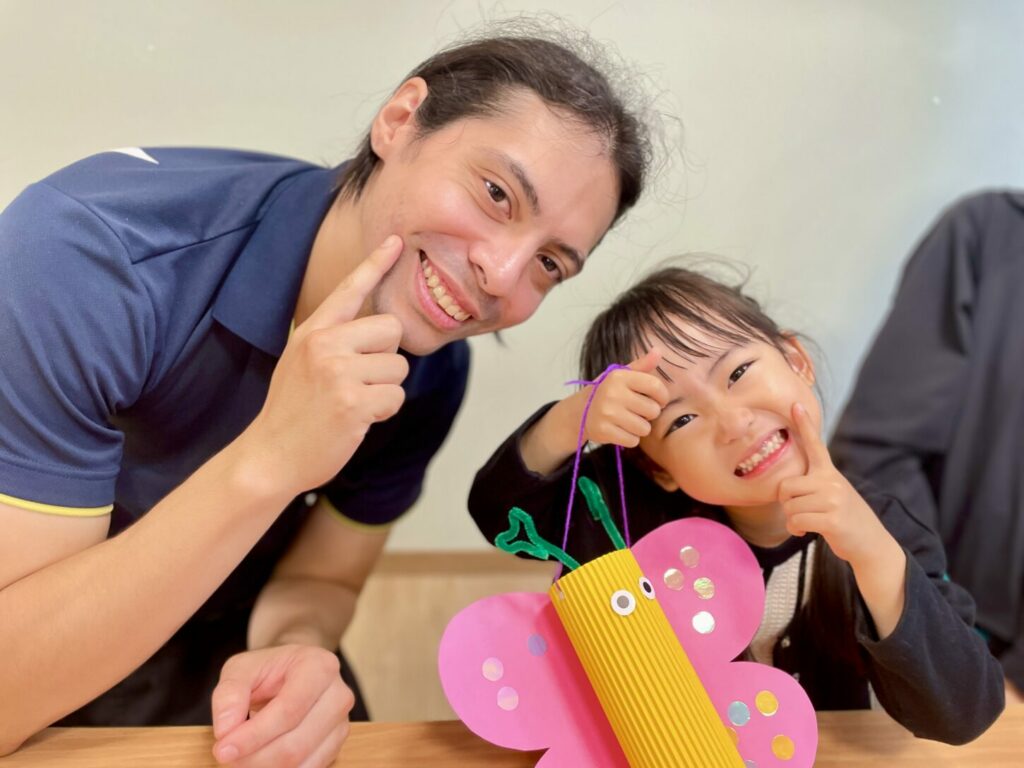
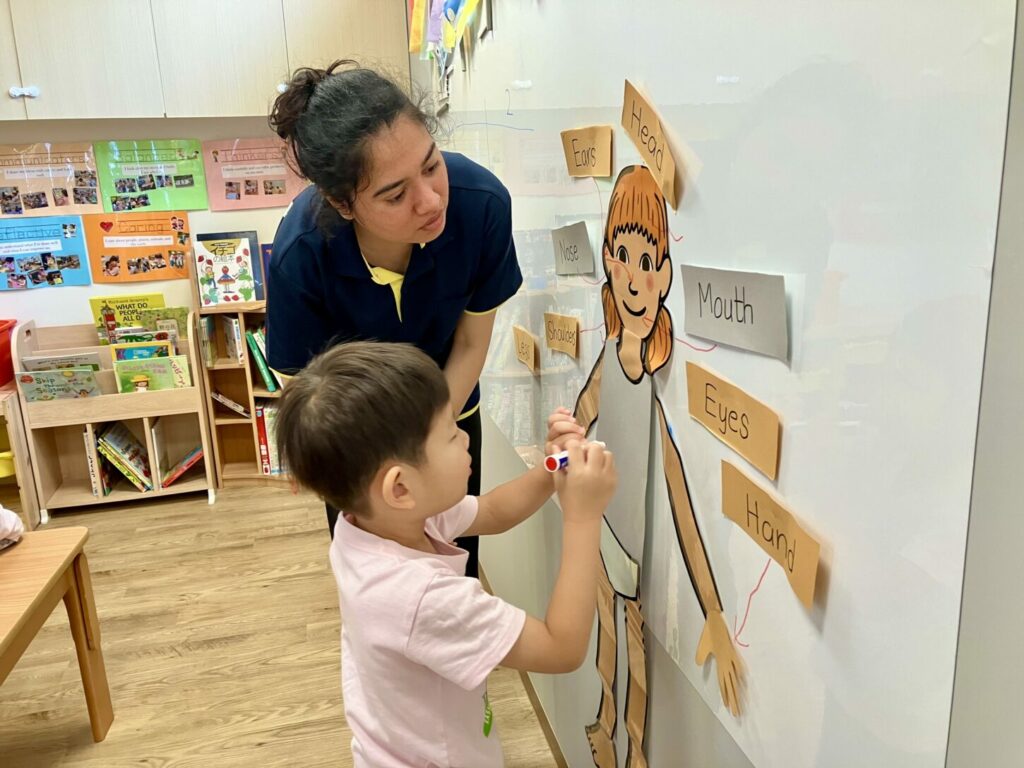
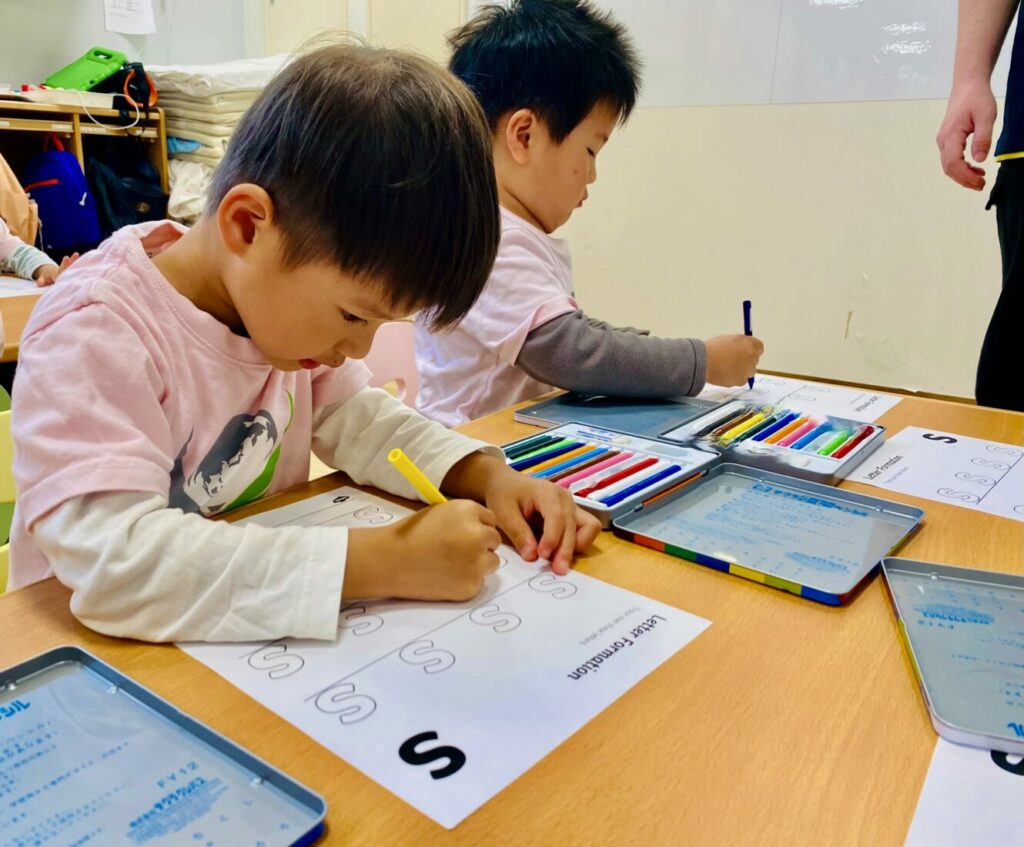
At Beyondia International School Kashiwanoha, our focus is not on “learning English,” but on “using English to play, live, and learn.” We provide an immersive bilingual environment where children aged 1 to 5 can naturally encounter English every day, according to their developmental stage.
Through songs, picture books, conversations, and play, children first experience small moments of success—discovering the joy of communication as they think, “English is fun!” or “I was understood!” Step by step, their listening and speaking skills develop naturally. Programs such as Jolly Phonics help them become familiar with English sounds and letters, providing a gradual foundation for reading and writing.
Throughout daily life and activities, we value each child’s curiosity—“Why is that?” “I want to try!”—and encourage interaction with teachers and friends. Through these exchanges, children naturally develop their ability to think, express themselves, and communicate with others.
In our environment, English is not a separate subject but a natural part of daily life. Even children who are new to English are supported gently and patiently, so they can use language confidently and comfortably at their own pace.
Nursery & Pre (Ages 1–2)
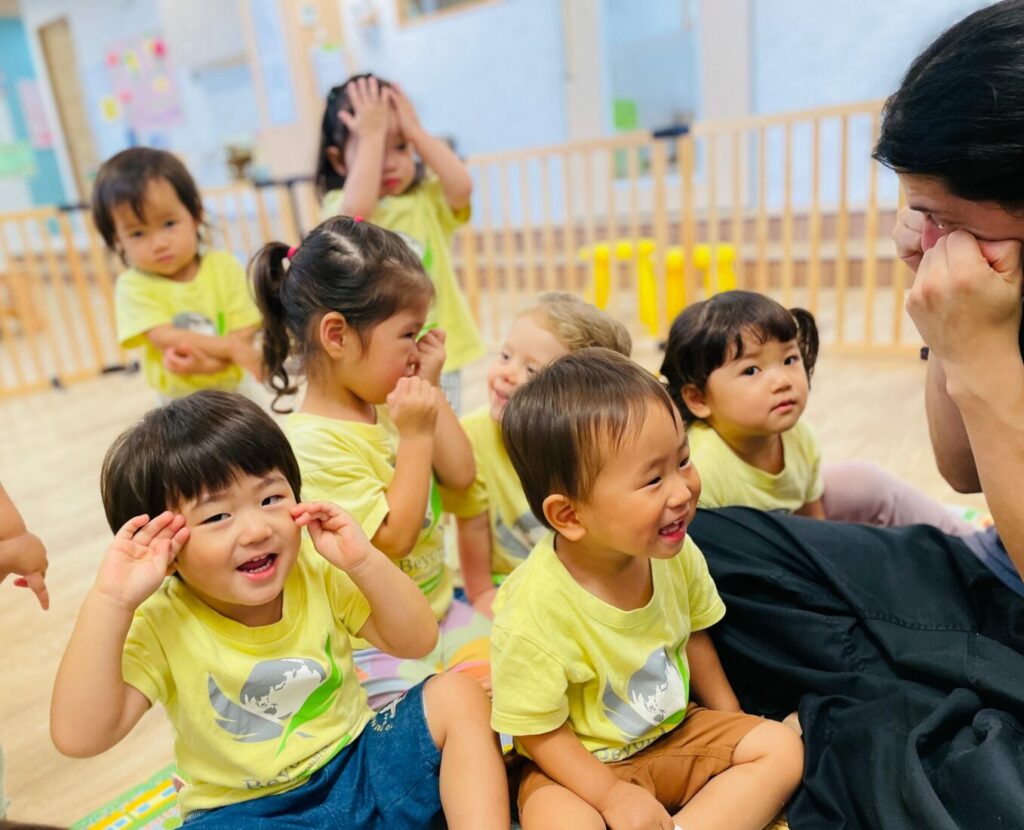
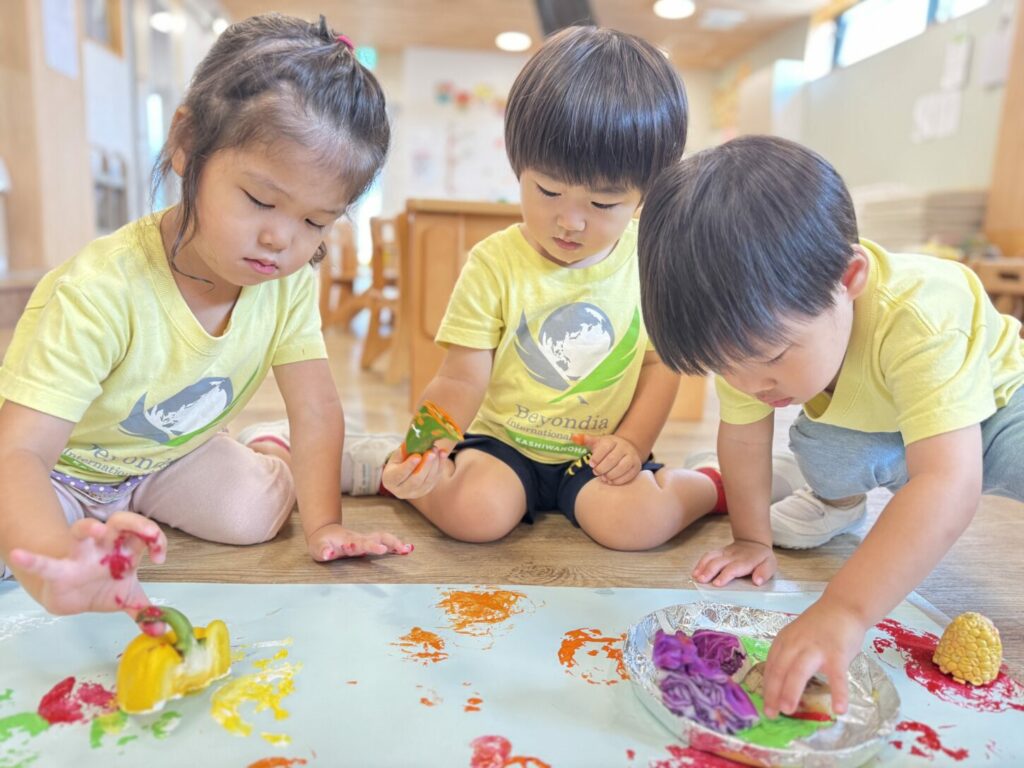
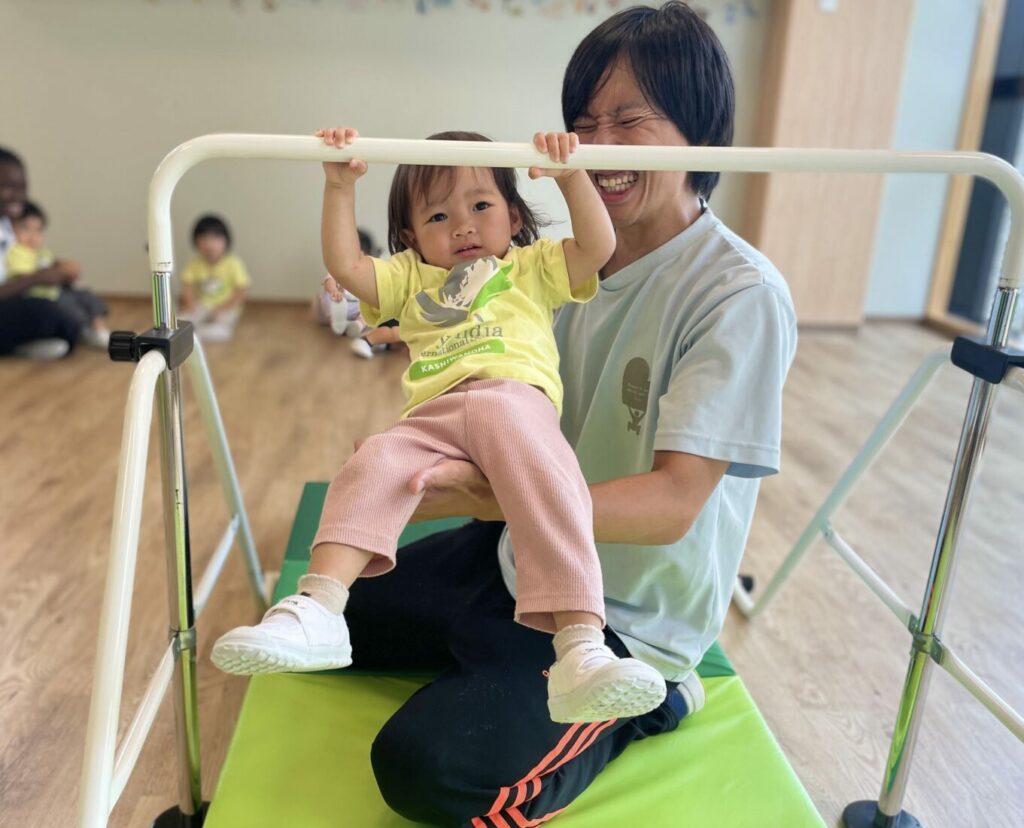
For our youngest learners, our top priority is that they feel safe, happy, and excited to come to school. Within a warm and calm atmosphere, they gradually adapt to group life while building secure, trusting relationships with their teachers.
Every day, children are surrounded by English in a playful and engaging environment designed to inspire natural learning.
Following monthly themes, they enjoy seasonal and cultural activities, and through Jolly Phonics, they are introduced to English sounds in a relaxed, fun way.
Outdoor time is also an essential part of the day. Weather permitting, we go outside daily, where children can explore nature and experience the changing seasons, nurturing both body and mind.
We also include Rhythmic and P.E. (Exercise Play) sessions led by specialist instructors, helping children develop rhythm, coordination, and a sense of joy in movement.
This is a precious stage where we gently foster the children’s curiosity, creativity, emotional awareness, and ability to connect and communicate with others.
K1–K3 (Ages 3–5)
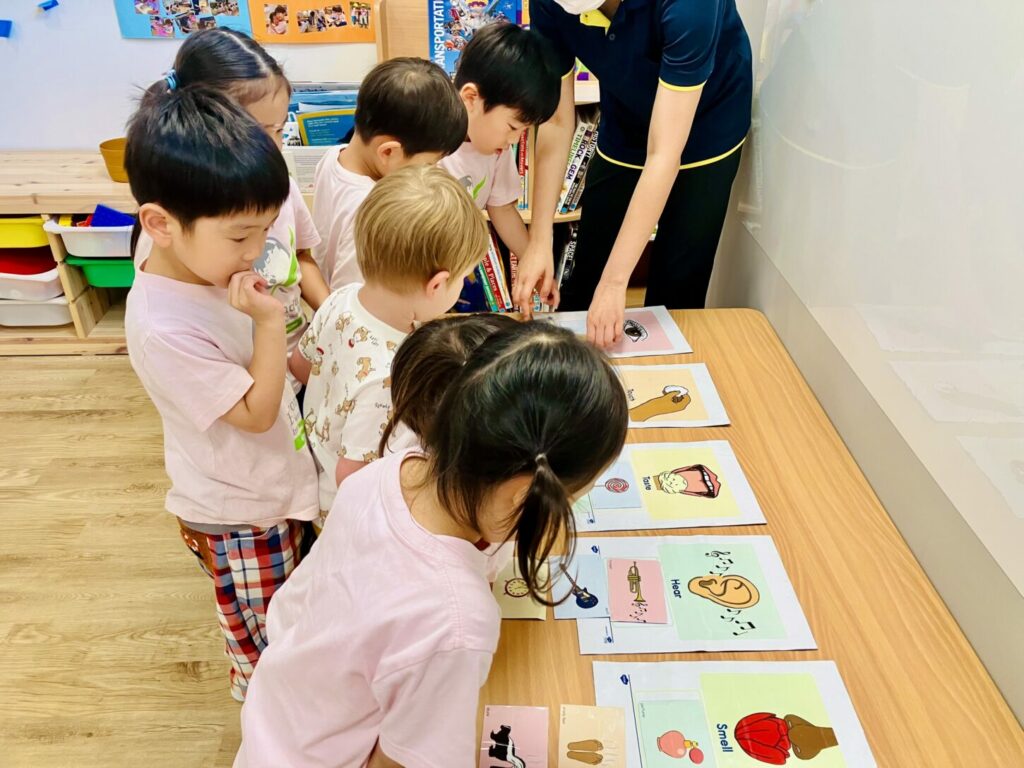

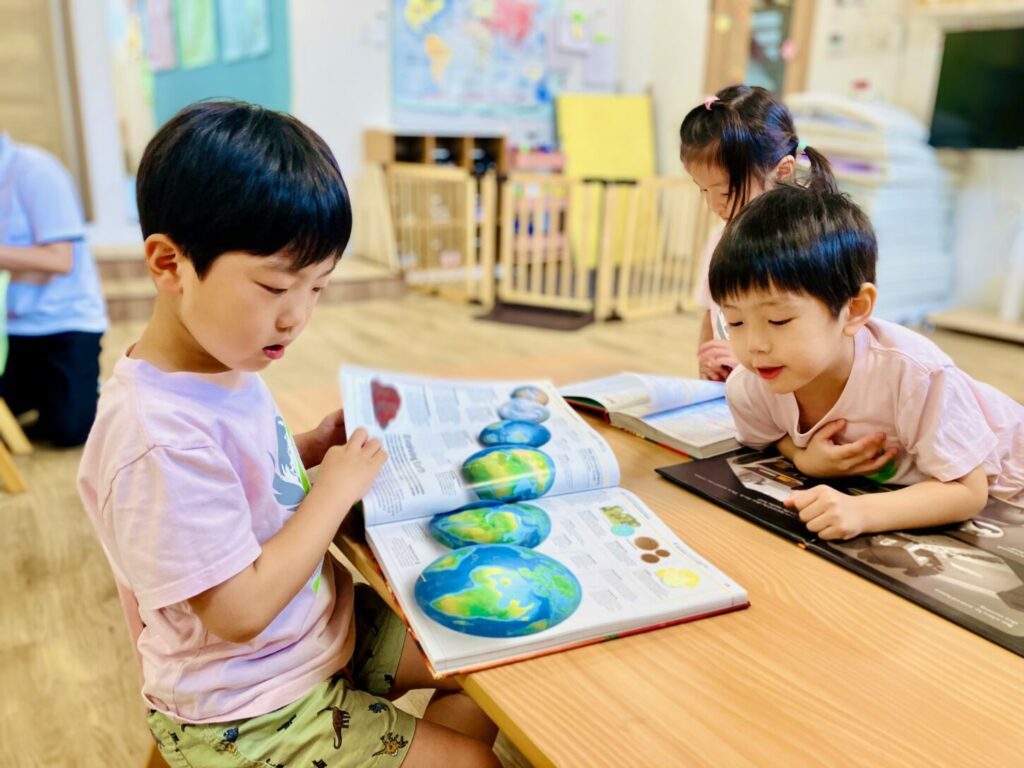
In our classes for ages 3 to 5, learning centers on inquiry-based activities inspired by the six transdisciplinary themes of the International Baccalaureate (IB) Primary Years Programme (PYP). We nurture children’s natural curiosity—“I wonder why?” “I want to try!”—encouraging them to explore, think, and express themselves freely.
Starting from simple questions about the world around them, children engage in discussions and investigations with their teachers and peers, deepening their understanding while developing key skills such as research, communication, and logical thinking. Through this process, they begin to think and act independently.
We place great importance on connecting learning to real-life experiences. Children take part in farm activities, cooking classes, and field trips, fostering an authentic sense of discovery. Additional programs include Outdoor Inquiry, P.E., Cognitive Development, Swimming, Rhythmic (for 3-year-olds), Japanese Activity, and Robotics, offering diverse, hands-on learning opportunities.
We also hold regular Show & Tell sessions, where children present something they’ve chosen themselves—such as a favorite toy, a souvenir, or an insect they found. These experiences strengthen self-expression, presentation skills, and empathy.
Through everyday activities, children develop curiosity, compassion, and a global perspective—key attributes of the IB Learner Profile.
English learning continues through Jolly Phonics and other materials, tailored to each child’s interests and pace, ensuring meaningful progress.
***Beyondia International School Kashiwanoha is a candidate school for the IB Primary Years Programme (PYP). Candidate status does not guarantee future authorization. Only schools authorized by the International Baccalaureate (IB) Organization can offer the IB’s four programmes: PYP, MYP, DP, and CP.***
Outdoor Exploration


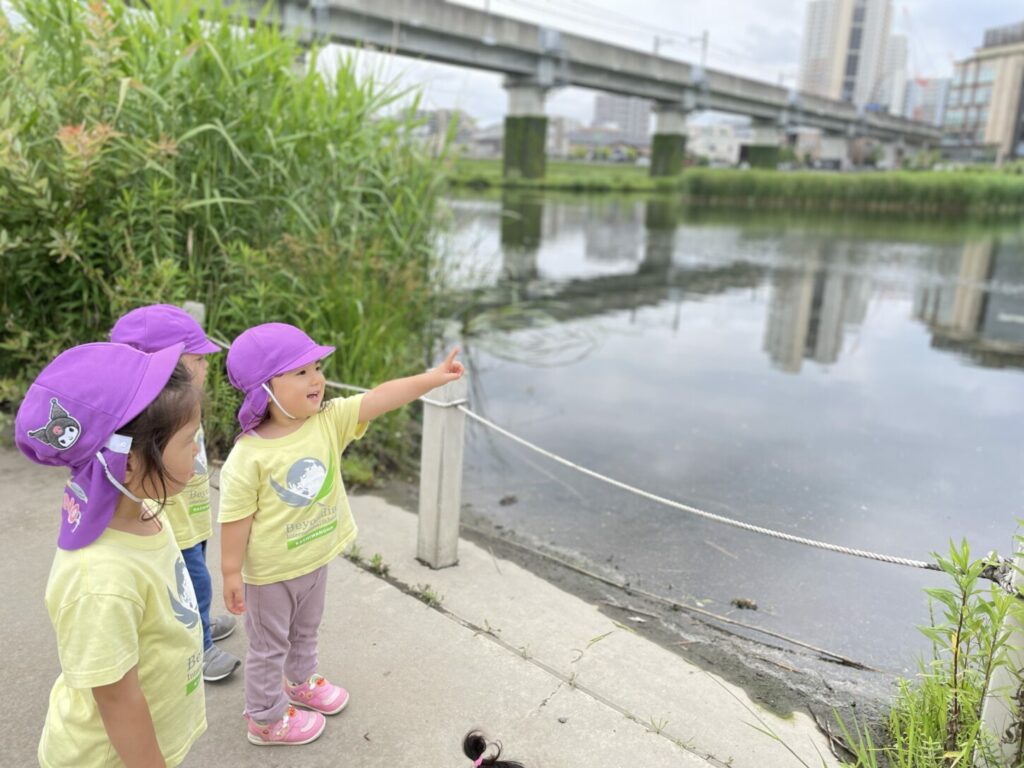
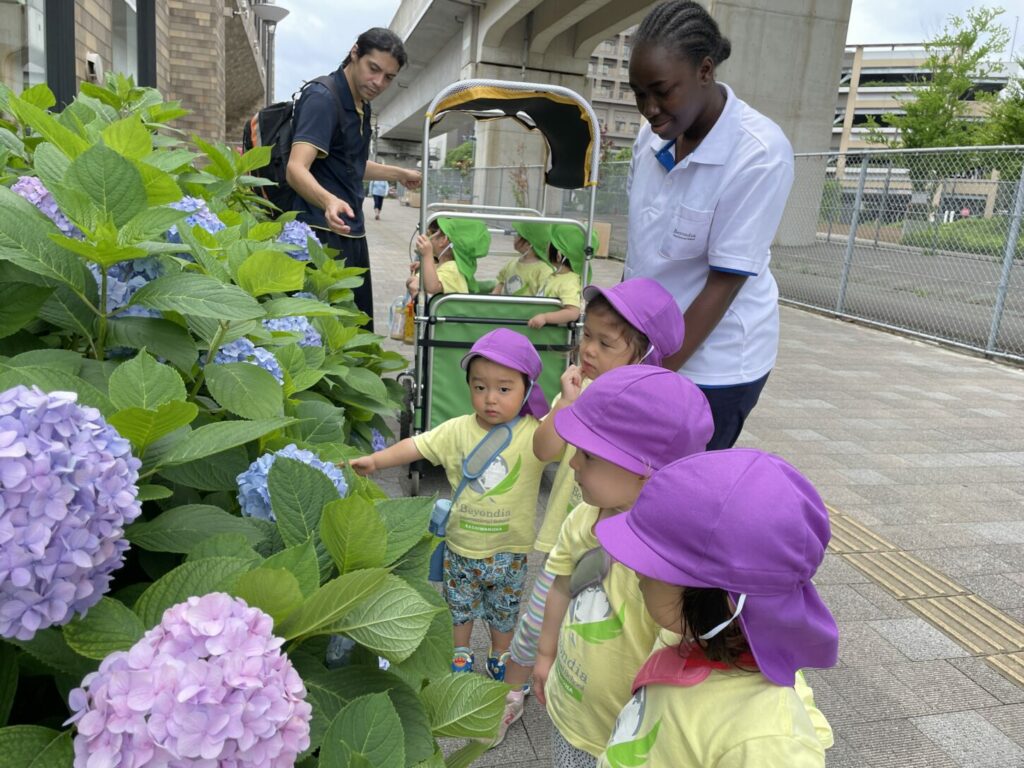
Our playground is not confined by fences—the entire city of Kashiwanoha is our learning field.
Children often visit places such as Konbukuroike Park, where they can explore wooded paths; Aqua Terrace, where they observe aquatic life; and parks like Wakashiba park, Omusubi Park, Shibatomo Park, Kokage Park, and Kitahanasaku Daiichi Park. For excursions, we visit Kashiwanoha Park to enjoy even broader nature experiences.
In these spacious outdoor environments, children move freely, encounter plants and insects, and discover the wonders of the natural world.
Through interactions with the local community, they learn to appreciate their city and nurture a caring attitude toward nature.
During rainy days or hot summer periods, we enjoy indoor movement through dance and play with equipment such as balls.
Library Program
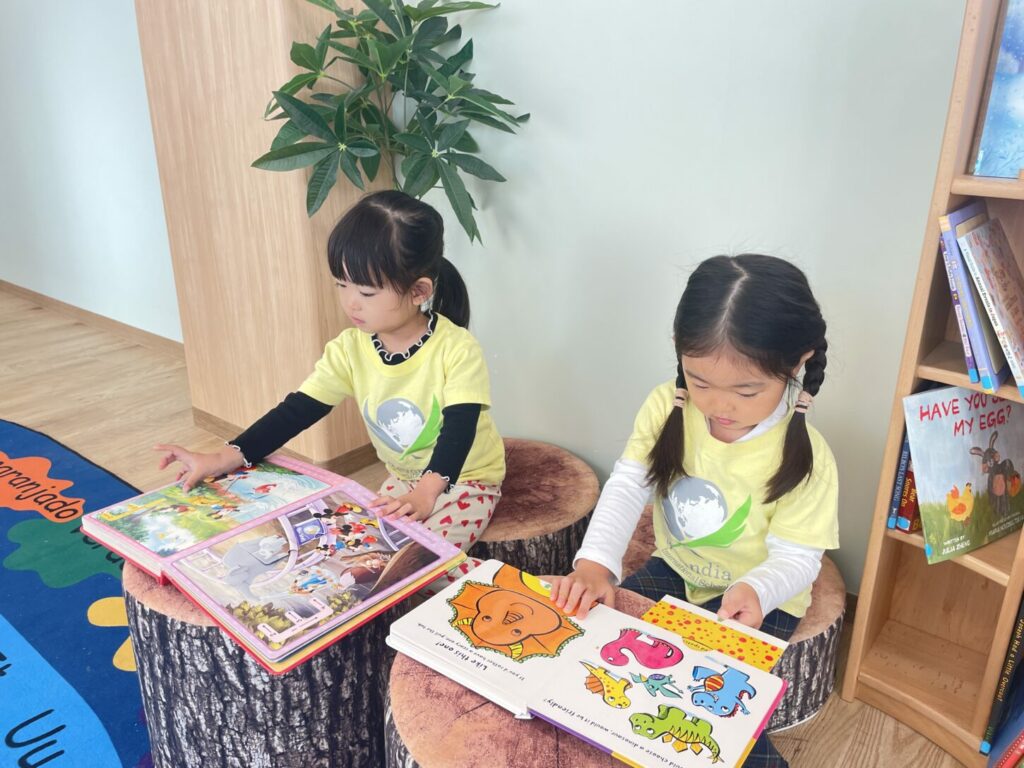

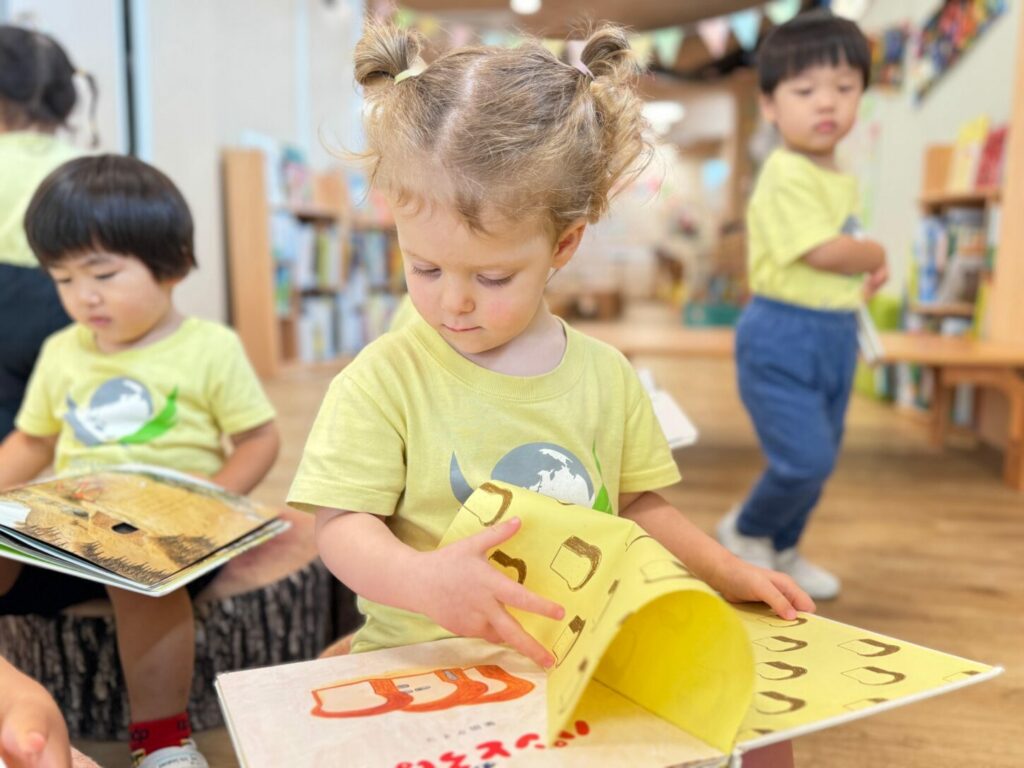
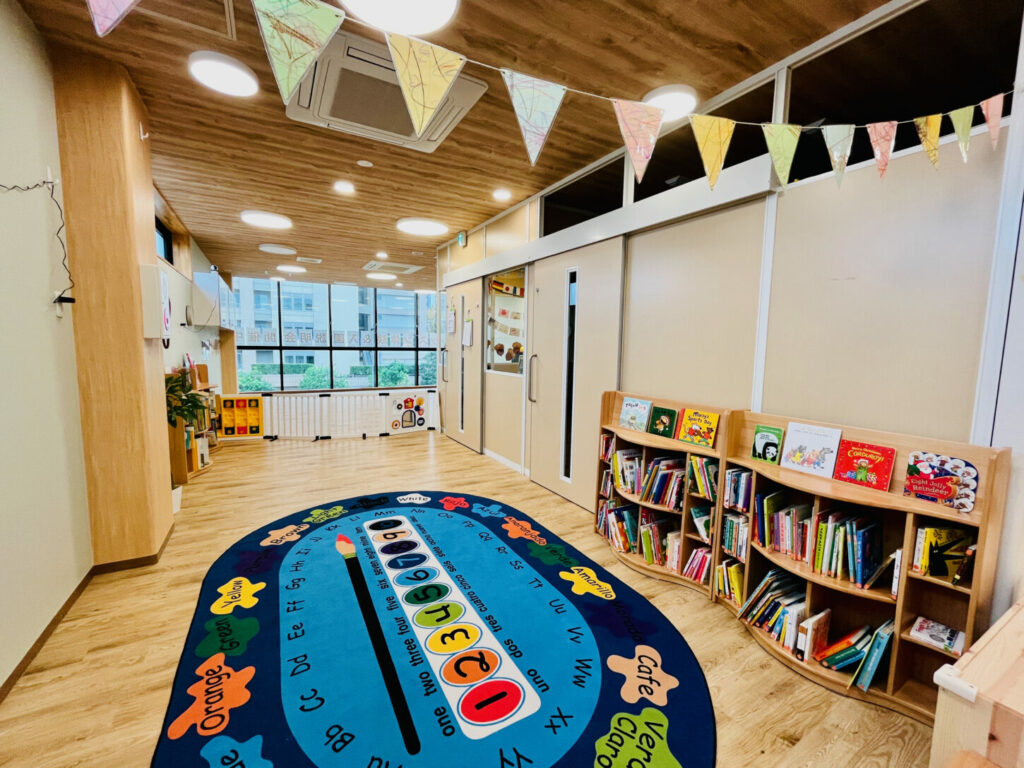
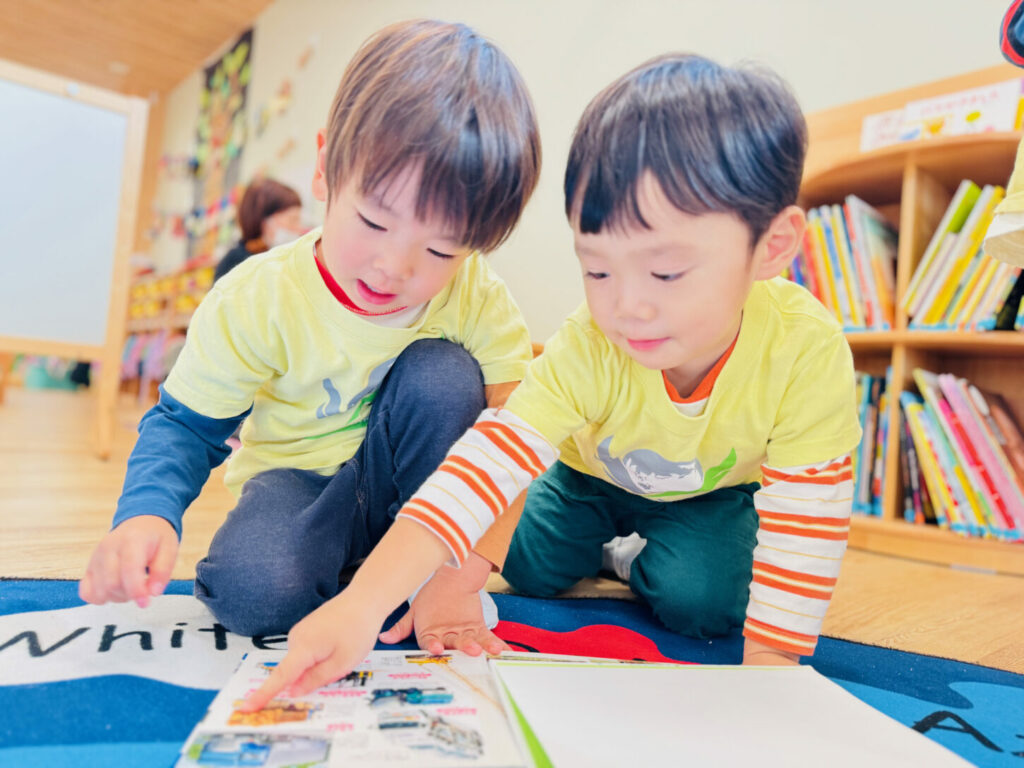
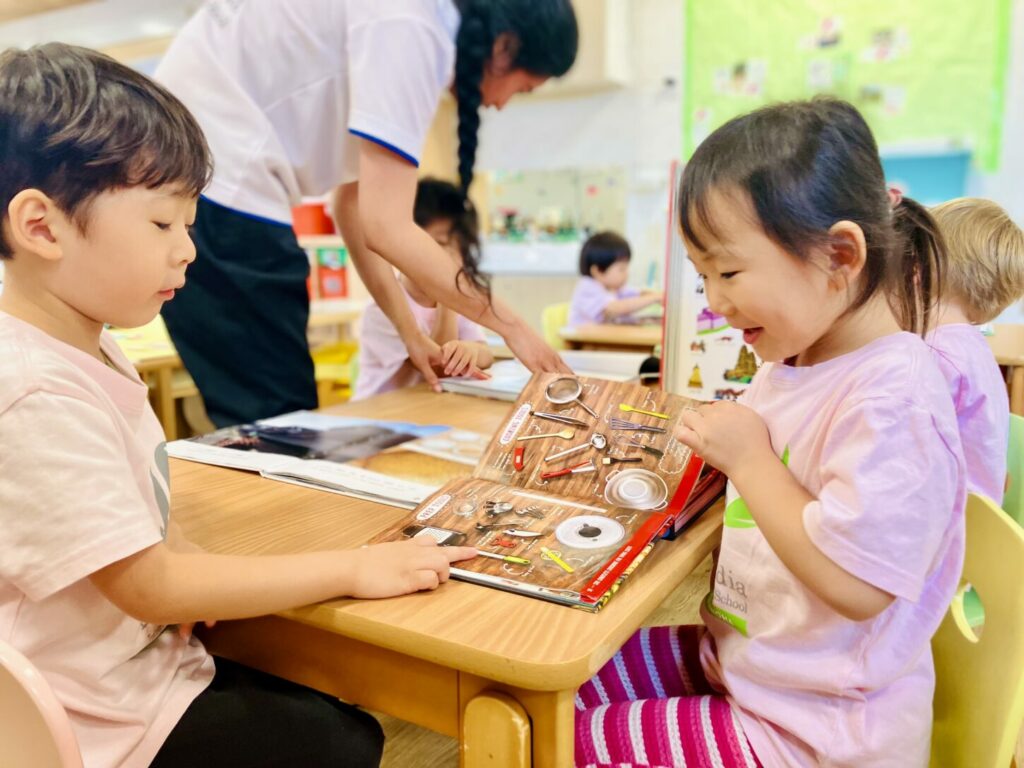
Under the supervision of Nellie’s, a leading English education resource provider, Beyondia operates a full-scale library program featuring over 1,000 books in English, Japanese, and other languages.
Each week on Library Day, children choose a book they love and bring it home. The act of selecting a book itself nurtures autonomy and sensitivity, while engaging with stories fosters imagination and language development.
On Friday evenings, we host Parent–Child Library Day, when families can choose books together. This shared time encourages family communication and helps children discover new favorite stories—an experience highly valued by parents.
Every borrowed book is recorded on a Library Card, which families receive at the end of the year—a beautiful record of the books and stories their child encountered throughout the year.
Enrichment Activities – Supporting Growth Through Real Experiences
At Beyondia, we collaborate with expert instructors and community partners to offer children genuine, hands-on learning opportunities.
These experiences not only expand children’s interests but also foster curiosity and a spirit of inquiry—“I want to try!” “Why does this happen?”—that form the foundation for lifelong learning.
Rhythmic (Ages 1–3)
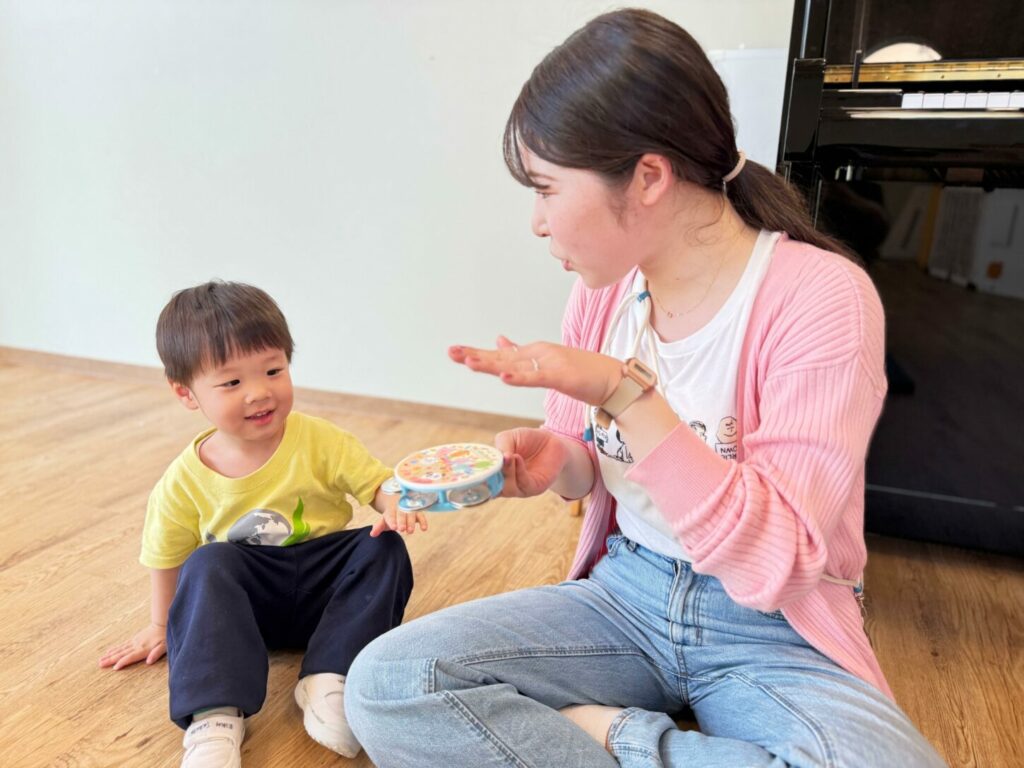
In partnership with BEYONDIA MUSICA, trained instructors guide children through lessons that help them experience music through movement and rhythm.
Children listen to live piano performances and move their bodies in time with melodies and rhythms, naturally developing focus, coordination, and sensitivity to sound. These sessions also nurture creativity and the joy of self-expression, allowing children to communicate feelings beyond words.
This experience encourages emotional growth and helps children appreciate their own individuality while enjoying music in a playful, engaging way.
*Language of instruction: Japanese
P.E. Play (All Ages)
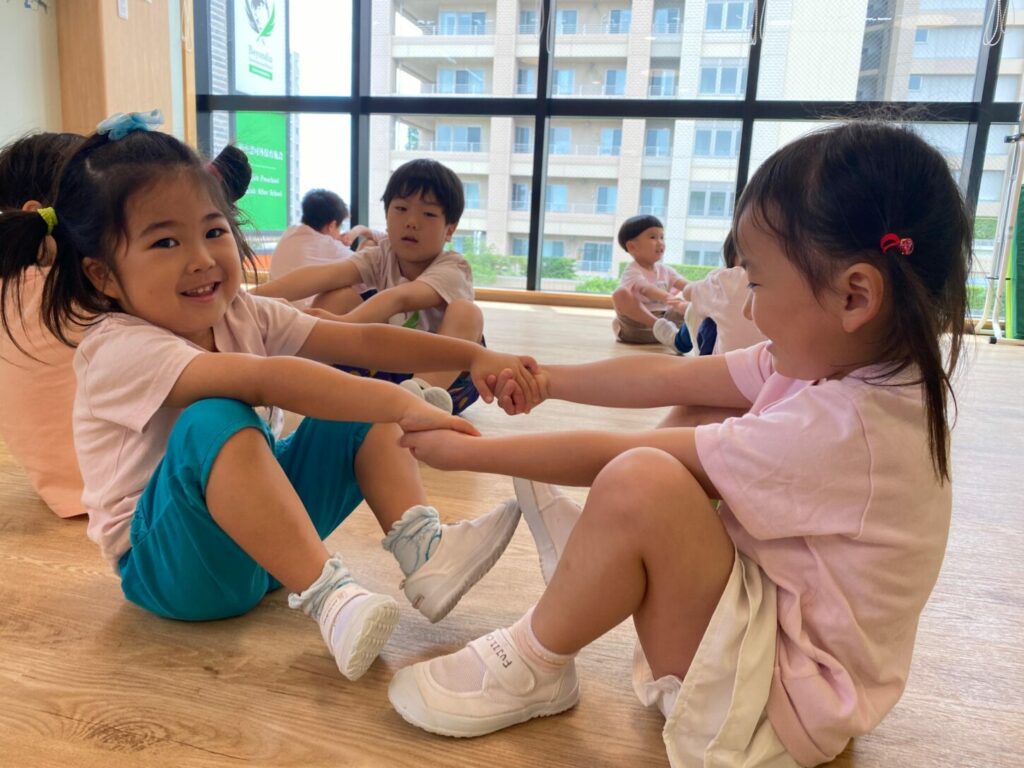
Conducted with NPO LEC Sports, our P.E. Play program helps children discover the joy of movement through age-appropriate activities. Lessons are designed to inspire feelings like “Moving is fun!” and “I want to try more!”, encouraging children to move freely and confidently.
Various physical exercises suited to each age and stage of development are introduced naturally, helping children learn how to use their bodies and build the foundations for lifelong fitness.
Through active play with friends, they also develop cooperation, perseverance, and the courage to take on new challenges. These early experiences of “I did it!” moments foster confidence, motivation, and a love of physical activity that supports both body and mind.
*Language of instruction: Japanese
Intellectual Play (Ages 3–5)
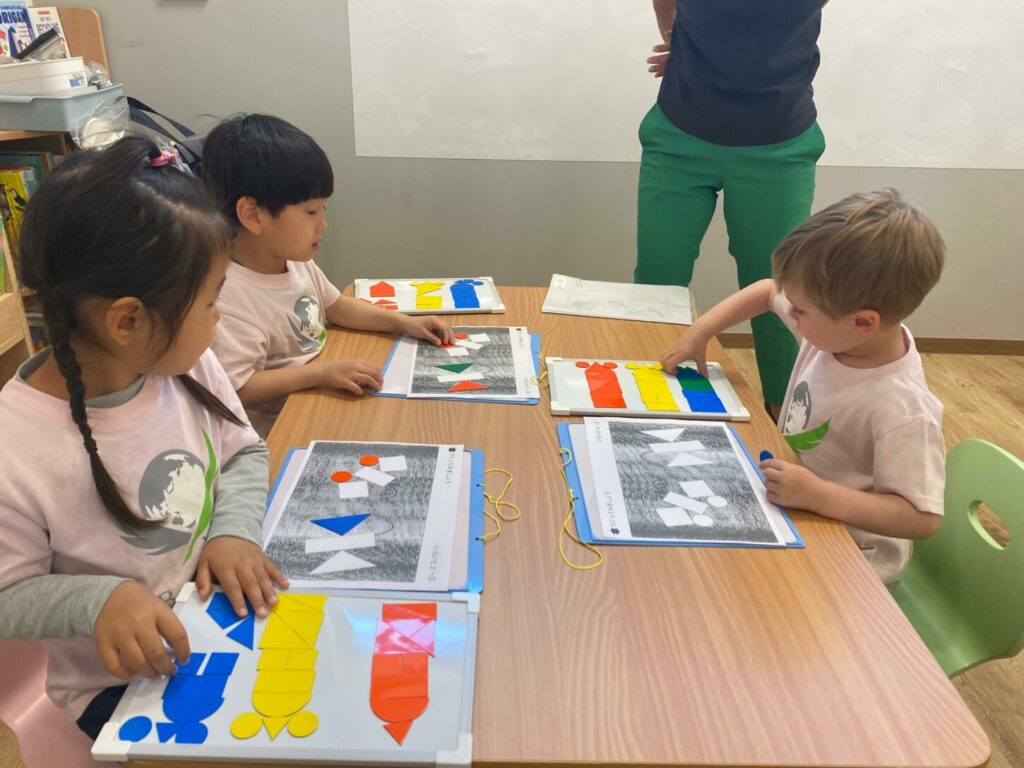
In collaboration with Mrs. Sullivan, our cognitive development program nurtures children’s thinking skills through activities tailored to their age and stage.
Using familiar themes such as shapes, numbers, and language, children engage in hands-on problem-solving, experimenting and creating to strengthen concentration, fine motor skills, and creativity. Activities often involve arts and crafts, allowing children to express themselves while learning.
Through trial and error—“How can I do this?” or “Let’s try again!”—children build confidence, resilience, and curiosity. This program also supports early academic readiness in a playful, motivating way.
The program is designed to be of high quality, allowing children to learn in a positive and stress-free way, while also including content that can support preparation for entrance exams to elementary schools.
*Language of instruction: Japanese
Swimming (Ages 3–5)
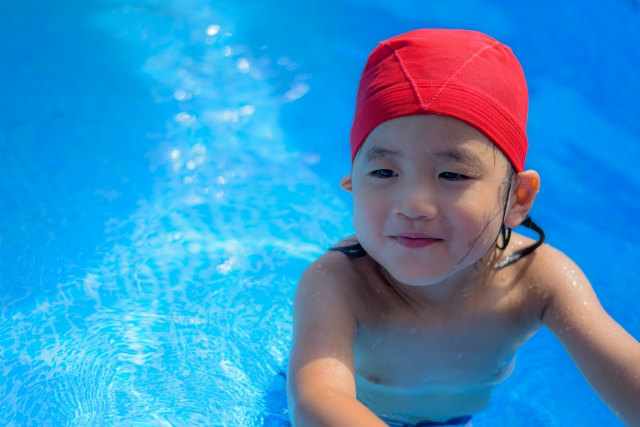
In partnership with Itoman Swimming School, children participate in swimming lessons at a dedicated facility.
Starting with water play, they gradually gain confidence, balance, and coordination in the water. Instruction is carefully tailored to each child’s level, incorporating playful activities to make learning enjoyable and safe. Swimming lessons also foster perseverance, courage, and a sense of achievement as children try new skills and gain independence in a supportive environment.
*Language of instruction: Japanese
Japanese Activity:3〜5歳児
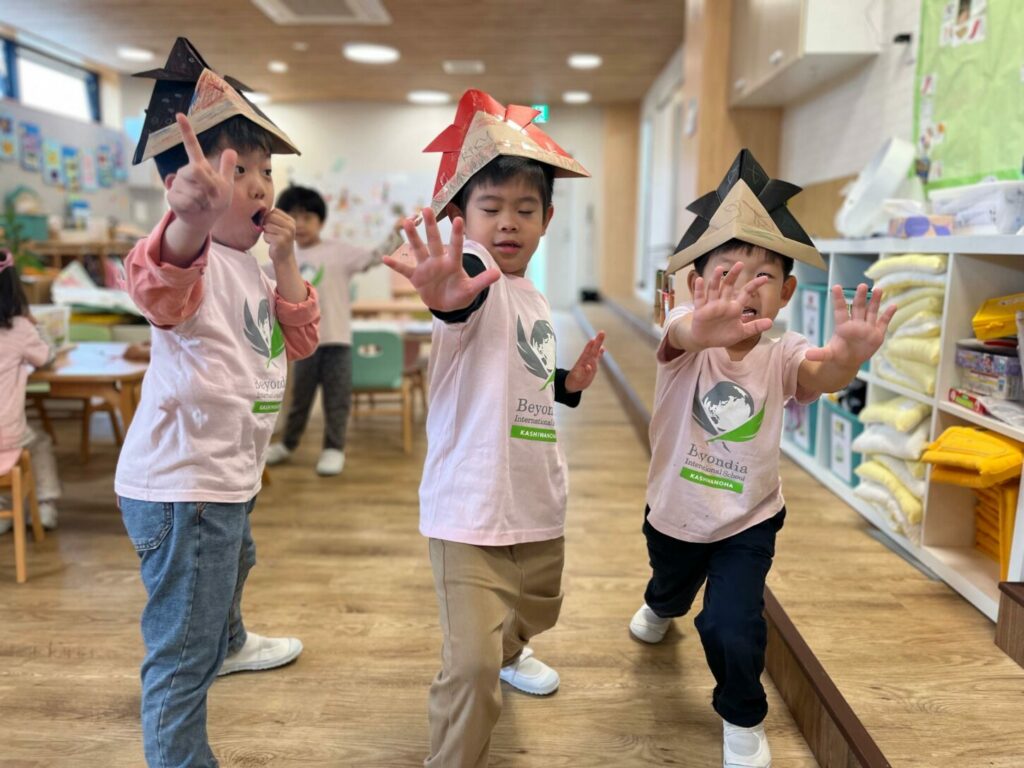
Our Japanese Activity sessions, led by experienced Japanese teachers, provide children with opportunities to connect with Japanese language and culture through seasonal events, picture books, and hands-on crafts.
These activities also allow children to reflect on concepts they have explored in English, helping them consolidate knowledge and deepen their understanding. Experiencing ideas in both languages encourages flexible thinking and expands their ability to express themselves clearly.
Through this program, children develop an appreciation for their Japanese heritage while gaining the skills to adapt confidently in a multilingual, multicultural environment.
*Language of instruction: Japanese
Agricultural Experience with Loco Door (Ages 3–5)
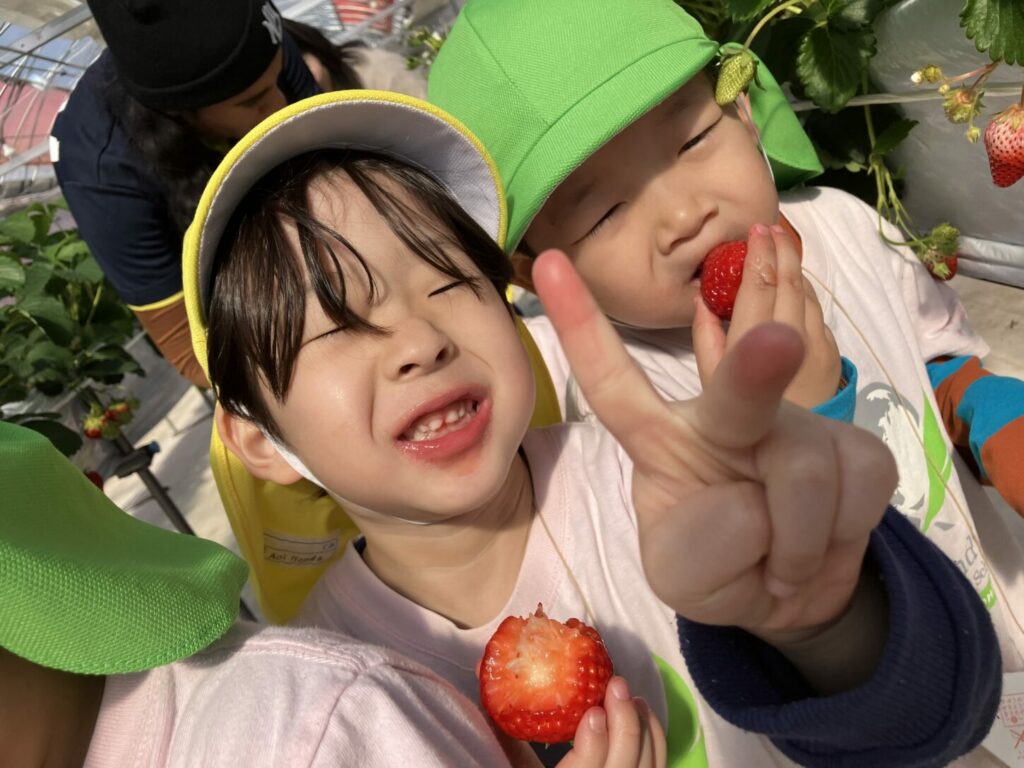
In collaboration with Loco Door at Chiba University, we run a continuous agricultural experience program for about six months starting around October, during which children observe and care for the growth of strawberries.
In October, the program begins with transplanting strawberry seedlings. Each month, children visit the greenhouse to help with pollination, measure sweetness, and experience the growth of the strawberries up close. By observing the power of nature and the work of living things, we nurture children’s curiosity and their desire to ask, “What’s happening?” and “I want to try it!”
In February, children harvest the strawberries they have grown themselves and taste them on the spot. Eating the crops they have nurtured also fosters interest in food and a sense of gratitude, providing a valuable food education experience.
This experience is connected to the IB inquiry theme “How the World Works”, offering children a hands-on opportunity to feel and learn about nature and the environment around them.
*Children in the 2-year-old class participate in strawberry picking around February. Children in the 1-year-old class have the opportunity to participate with their parents
*Language of instruction: English/Japanese
Cooking Class with Keiyo Gas (Ages 3–5)
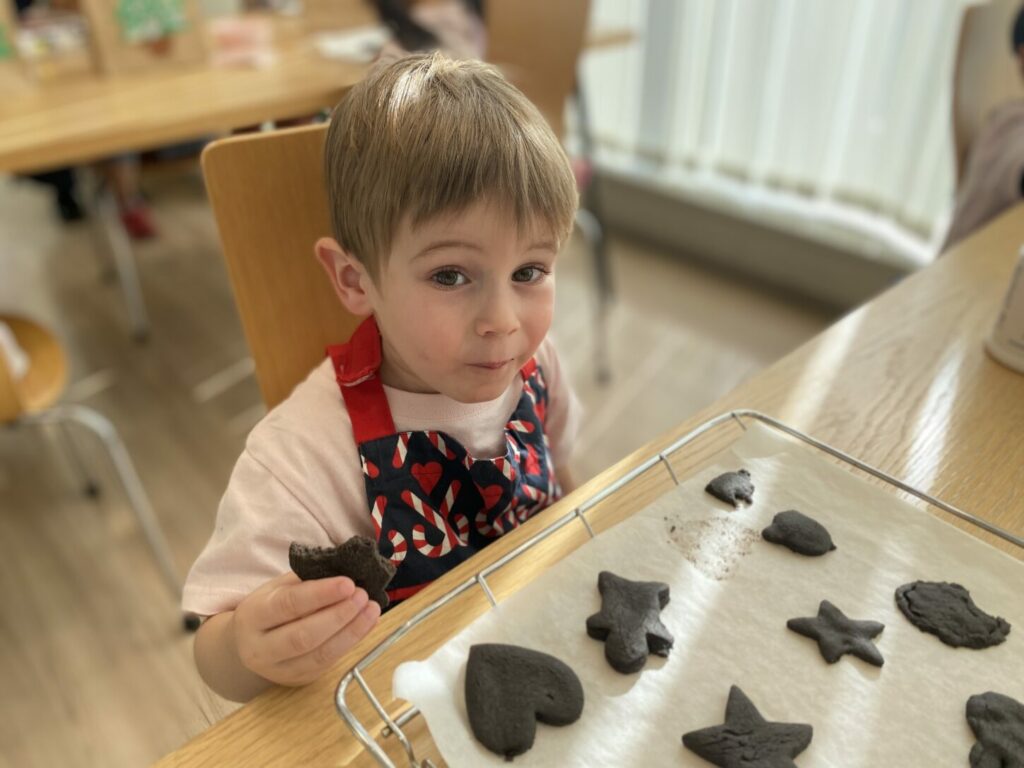
In partnership with Keiyo Gas, we conduct cooking classes three times a year.
These classes are linked to seasonal events and IB inquiry activities, with a focus on nurturing the joy of “Making is fun!”and “Eating is delightful!” while engaging in activities with enjoyment and enthusiasm.
Children handle ingredients themselves, cutting, mixing, and preparing dishes, making the experience of cooking a special treat. Sharing and enjoying the food together with friends and teachers—“It’s delicious!” “I want to make it again!”—is an important learning experience that nurtures both the heart and social skills. These activities are extremely popular with children every time.
*Language of instruction: English/Japanese
Robotics (Ages 5 – Second Term)
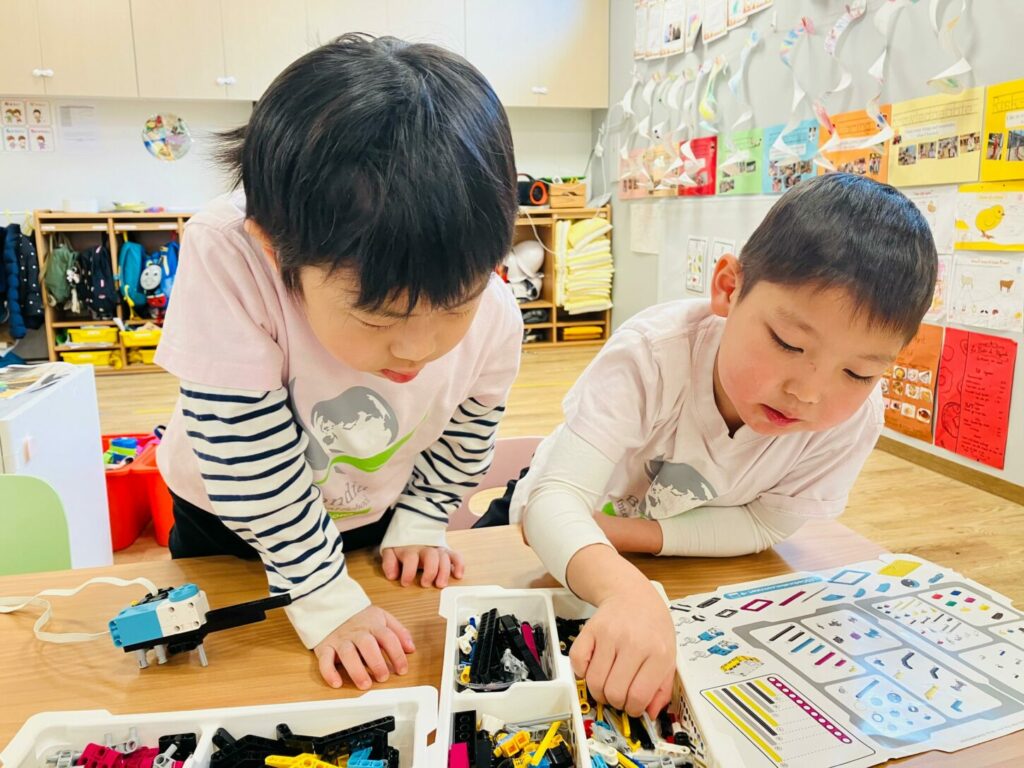
In the second half of the K3 (5-year-old) class, children participate in robotics with Robo-Dan.
Each session follows a theme, and assembling a different robot each time is an exciting experience for the children. Working in pairs, they discuss, divide tasks, and go through trial and error, naturally developing teamwork and logical thinking skills.
Through interactions like “How can we make it move?” and “Let’s try changing this part!”, they also develop problem-solving skills and a willingness to take on challenges. The smiles when they complete and operate their robots are a true sense of achievement.
This is the first step in STEM education, helping children acquire skills that will connect to the future.
*Language of instruction: Japanese
